State Visit to Norway highlights strategic energy partnership with Belgium and Fluxys
The Belgian State Visit to Norway in March 2026 came at a significant moment for Europe’s energy system and supply. As geopolitical tensions continue to reshape energy flows and impact the global economy, the visit highlights the growing strategic importance of cooperation between Belgium and Norway, particularly in the fields of security of supply, decarbonisation and energy infrastructure. For Fluxys, the visit underlines Norway’s central role as a long-standing and future-oriented partner across natural gas, offshore energy and CO₂ infrastructure.
A cornerstone of Europe’s security of supply
Norway is a cornerstone of Belgium’s and North-West Europe’s energy supply. The country has been Belgium’s most prominent source of natural gas for years, with gas delivered directly via the Zeepipe offshore pipeline, which connects Norwegian production fields to Belgium. Through this infrastructure, Belgium acts as a key gateway for Norwegian gas to the wider European market, reinforcing the resilience and stability of Europe’s energy system.
The Belgian-Norwegian energy partnership, built over decades, has proven its strategic value in times of crisis and remains a vital asset for the years ahead.
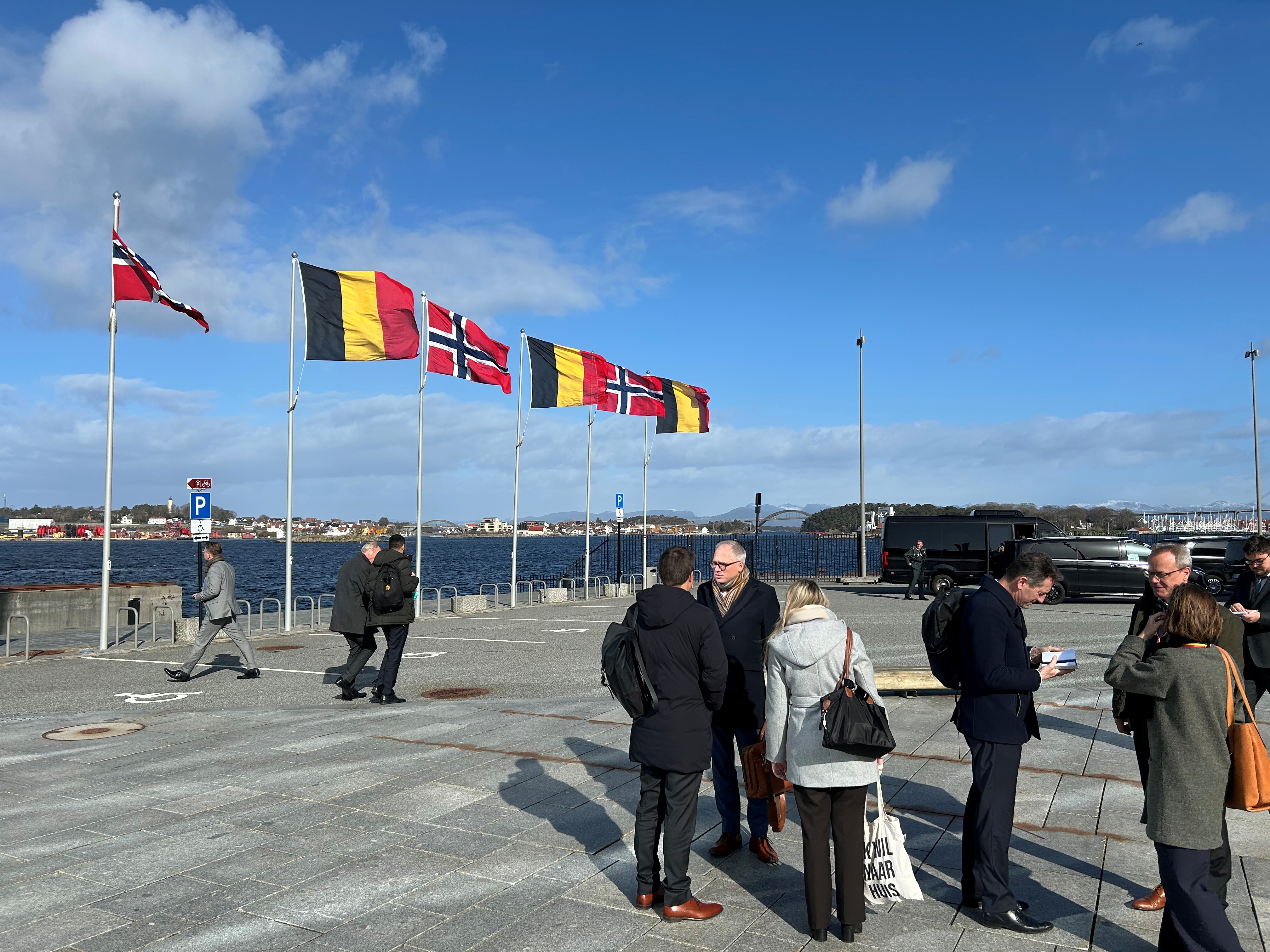
A partnership built over decades: Fluxys and Equinor
At the heart of this cooperation lies the long-standing partnership between Fluxys and Equinor, which dates back to the early 1970s. Together, both companies have contributed to the development and operation of critical cross-border energy infrastructure, with Zeepipe as one of the most prominent examples.
This collaboration is now evolving beyond natural gas. As Europe transitions towards a climate-neutral economy, Fluxys and Equinor are working closely to enable the next generation of infrastructure needed to support industrial decarbonisation.
CO₂ transport and storage: enabling industrial decarbonisation
A key focus of the State Visit was carbon capture, transport and storage (CCS). While many industrial processes remain difficult to decarbonise, permanent CO₂ storage offers a concrete and scalable solution. Norway has increasingly invested in this domain, developing a clear policy framework designating suitable offshore geological formations beneath the North Sea to enable safe and permanent storage.
Fluxys and Equinor are working in partnership to develop open-access CO₂ transport infrastructure connecting industrial emitters in Belgium and neighbouring countries to permanent storage sites in Norway. Equinor is developing the CO₂HighwayEurope project, a subsea pipeline from Zeebrugge to the Norwegian continental shelf for large-scale CO₂ transport to offshore storage. In parallel, Fluxys and OGE launched the Ruhbens project, a CO₂ backbone that connects industrial clusters in Germany to storage sites via Belgium.
During the State Visit, Belgium and Norway formalised their cooperation by signing a bilateral treaty that establishes the legal framework for cross-border CO₂ transport. This milestone provides regulatory certainty and paves the way for concrete infrastructure investments.
Building a resilient, low-carbon energy system together
Beyond natural gas and CO₂, the State Visit also reflects a shared ambition to develop the North Sea as a hub for offshore renewable energy, including offshore wind. Belgium and Norway are working with other North Sea countries to scale up offshore wind capacity and strengthen cross border cooperation, ensuring a more balanced and resilient renewable energy system.
For Fluxys, the visit illustrates how existing energy partnerships can evolve into vital alliances. By combining decades of operational experience with new investments in CO₂ and low-carbon infrastructure, Fluxys aims to continue serving society by supporting both Europe’s energy supply and the decarbonisation of industry.
The Belgian State Visit to Norway also reflects a shared vision: strengthening energy security, accelerating the energy transition and safeguarding Europe’s industrial future through concrete infrastructure projects and long-term cooperation. For Fluxys, it confirms Norway’s role not only as a trusted natural gas source today, but also as a key partner in building tomorrow’s low-carbon integrated energy system.