Torching
Fluxys manages the gas infrastructure in our country and carries out regular maintenance on the facilities. To do so safely, we sometimes remove excess natural gas from the pipes. We burn that gas with a torch.
What is torch burning?
Gas that we want to remove from our plants, we have controlled burning using a flare. We call this torch burning or torching.
How do you recognise that as a local resident?
The most noticeable aspect of flaring is the flame that is produced, which may, depending on the type of installation, be visible from a considerable distance. As this is a controlled operation, the flame does not pose any risk, and no noise disturbance is expected (or only occasionally and to a limited extent).
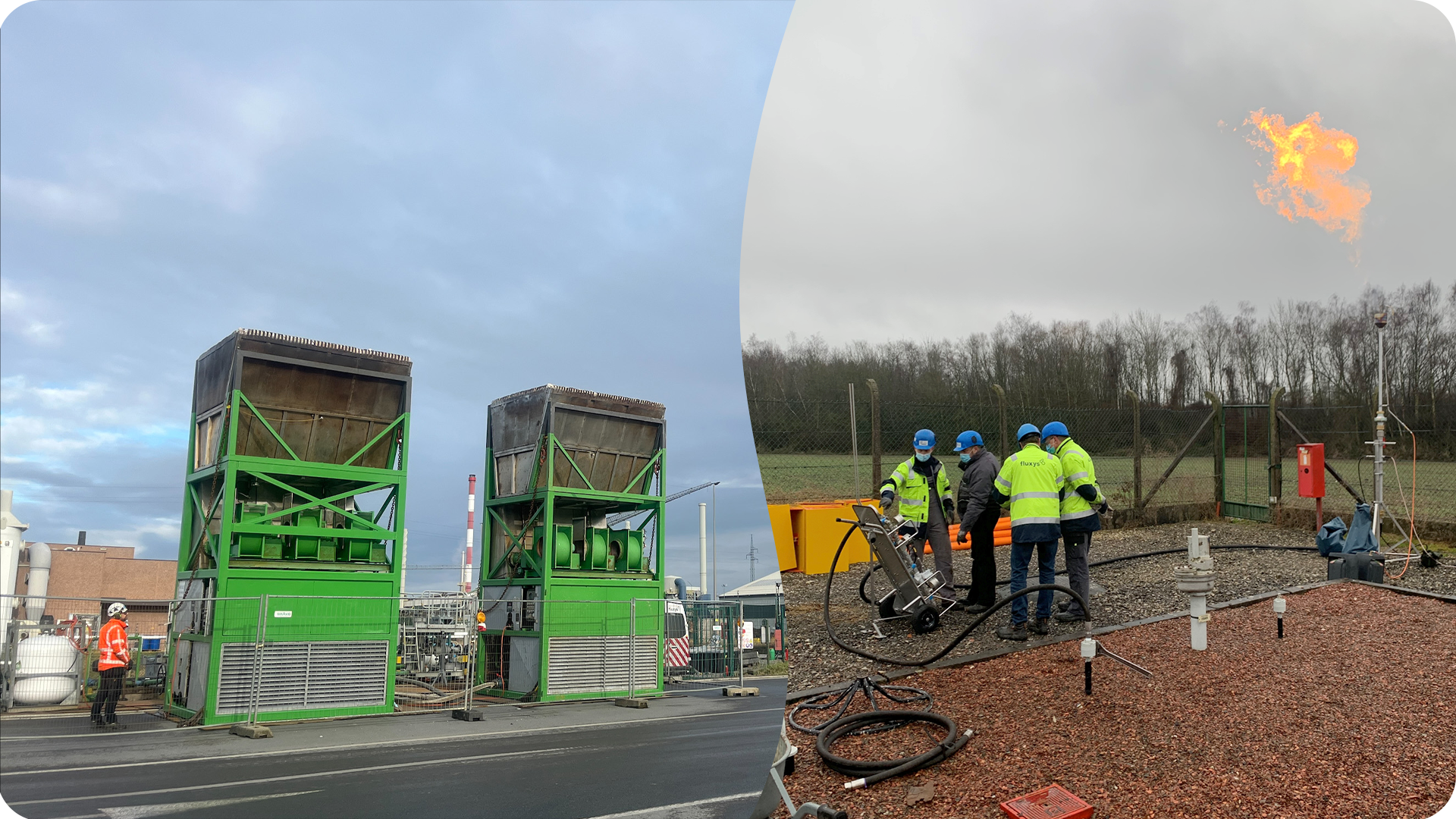
Why does Fluxys choose flare combustion?
To work safely at our stations, they sometimes need to be free of natural gas. To avoid releasing gas into the atmosphere, flare combustion is now chosen. This way we limit the impact on the environment.
First we recover as much natural gas as we can, only then does the flare burning happen. That way, we burn as little gas as possible.
Are there any dangers in torch burning?
Torch burning takes place in controlled and safe conditions. Fluxys' technical staff will remain present during combustion to manage this process. They are trained for this purpose and follow all safety procedures. For the safety of our staff, burning is done at a sufficient height. This also allows the flame to be visible to local residents.
Before applying flare combustion, Fluxys always notifies the emergency services. This way, they are informed in case of any questions or concerns.
Building a clean energy future
With flare burning, we reduce the impact on the environment. Eventually, we will go for a completely emission-free method by reusing natural gas completely.
That choice is in line with Fluxys' ambition to be fully climate neutral by 2035. Moreover, Fluxys is backing the European Clean Industrial Deal. Which targets a carbon-neutral Europe by 2050. Our energy pipelines play a key role in this. Step by step, we are converting our grid so that in the future we can also transport substances other than natural gas, such as carbon-neutral biomethane, hydrogen or captured CO₂.
- For any questions or more information, contact Fluxys!Community Relations