The North Sea Integration Model in a nutshell
The North Sea Integration Model results from the multi-year collaboration between Fluxys Belgium and the University of Liège (Belgium) on the INTEGRATION project. Aimed at developing methodologies to design an optimal energy system for Belgium, the project was supported by the Belgian Energy Transition Fund. Once the project completed, with Fluxys Belgium we extended the approach to create a model covering all countries bordering the North Sea. Through this development we also take into account the commitment of the North Sea countries to make the North Sea the largest green energy plant in Europe.
Geographical scope
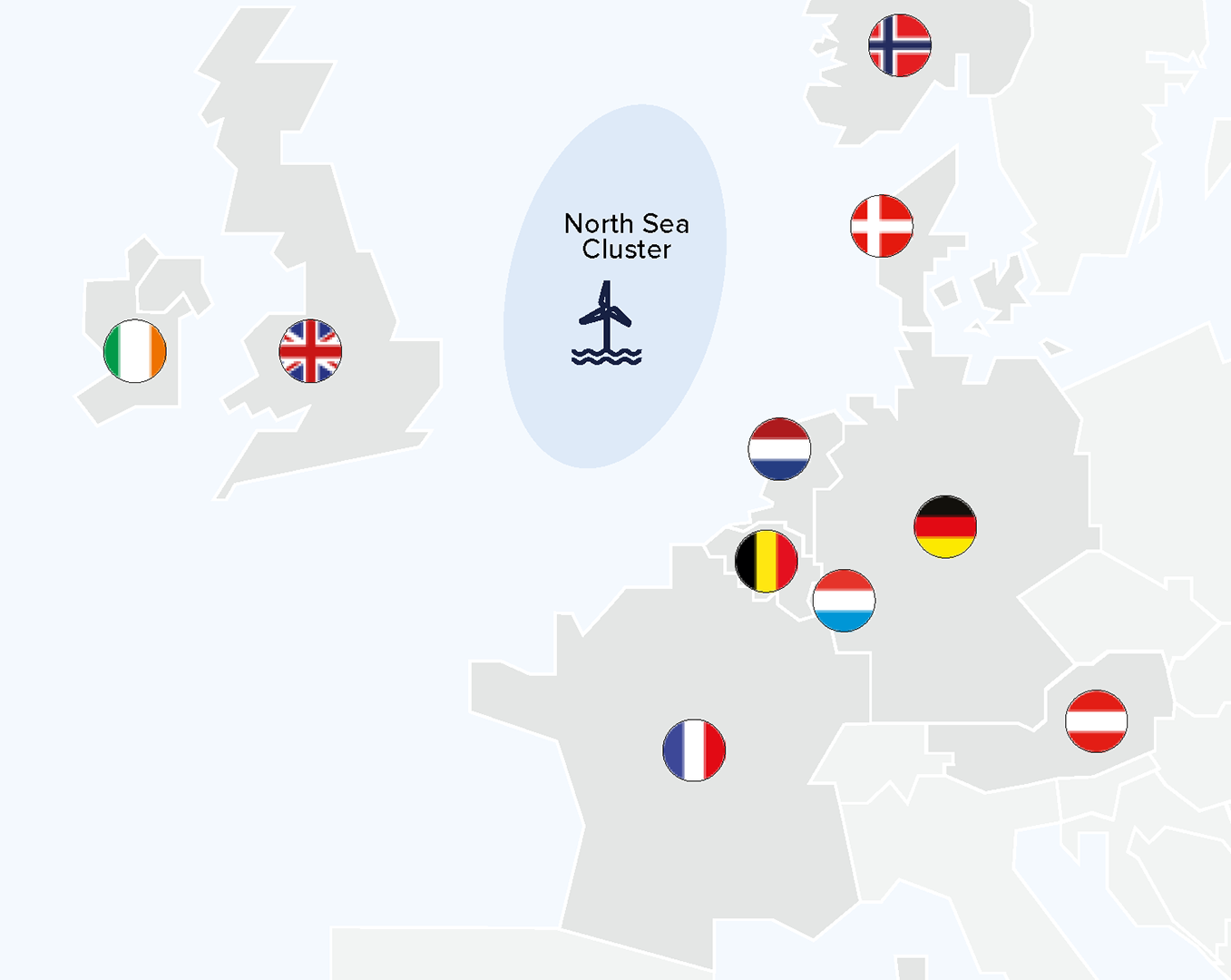
The model includes Belgium and Luxemburg, the Netherlands, Germany and Austria, Denmark, Norway, the UK and Ireland, France, and the North Sea Cluster. The latter includes all offshore wind developments more than 40 km from shore. Some countries have been combined in order to reduce the complexity of the model.
How the model works: calculating the optimum
The model calculates and designs an energy system that matches the requirements put forward: a net-zero system serving demand at any given time at the lowest cost. This translates into capacities that should be built for each technology.
Key insights from the North Sea Integration Model
- A net-zero energy system in the North Sea countries by 2050 is realistic and will require both electrons and molecules.
- Renewable electricity generation is expanding on a massive scale.
- Electrolysers are driving the deployment of offshore wind energy.
- Dispatchable power generation remains necessary when renewable production, combined with imports from neighbouring countries, does not meet final demand during winter.
- Carbon capture, transport and storage (CCS) are essential to achieve net-zero emissions.
- Biomethane, biogas and biomass are also powerful allies in achieving carbon neutrality.
- Energy storage (electricity, natural gas and hydrogen) is essential to provide energy when it is needed.
- Interconnection capacities between countries for electricity, natural gas and hydrogen optimise the energy system and ensure security of supply.

Downloads
We bundled the key insights of the North Sea integration model into 2 publications. You can view and download the Full report (PDF 8.8MB) or an Executive summary (PDF 1.7MB).


- Please feel free to contact us
- Thierry VervenneTim De Vil