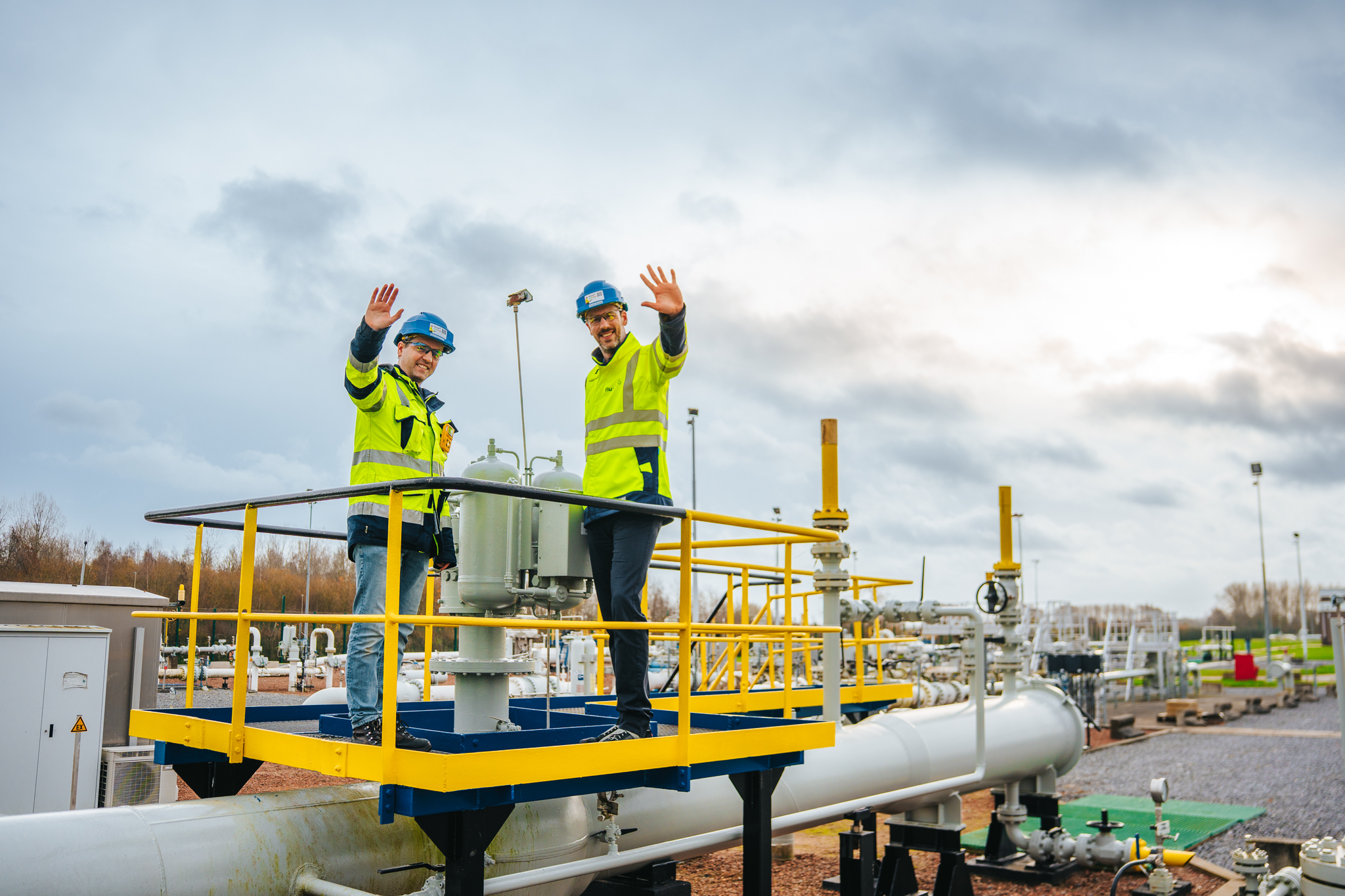
Zeebrugge-Brussels energy corridor
Natural gas today, ready for hydrogen tomorrow
The Zeebrugge–Brussels route is a key energy corridor for Belgium and North-West Europe. Fluxys is laying a new underground pipeline to strengthen natural gas transmission capacity from Zeebrugge towards both Belgian and neighbouring markets, thereby further supporting security of supply in North-West Europe.
At the same time, this pipeline is being built with the future in mind: when natural gas demand decreases, the offered capacity can become redundant, and the infrastructure can be repurposed to transport hydrogen in line with market needs and after an agreement has been reached with all relevant authorities. Repurposing entails a fraction of the cost of laying new pipelines and is therefore a key element for an effective energy transition. This project reflects how energy infrastructure is evolving together with energy transition. Natural gas transmission is essential to support security of energy supply today, while hydrogen is expected to become increasingly important for industries that need low-carbon molecules to reduce their emissions.
The pipeline is being laid in several phases: the first pipeline between Desteldonk (near Ghent) and Opwijk (near Brussels) was fully commissioned in early 2024, a next phase between Knokke and Evergem started in 2025 and commissioning is scheduled for the end of 2026. A final short section between Zeebrugge and Knokke will follow in synergy with other projects.

Zeebrugge-Brussels pipeline in figures
- 97 kilometres of pipeline
- Underground
- Special engineering techniques under nature reserves, rivers, motorways and railway lines
- 5,500 pipes, 18 metres long and 1 metre in diameter
- Weight of each pipe: 9 to 12 tonnes
- Capacity: 20 GWh/h, equivalent to 20 nuclear reactors
- Investment: €300 million
- First phase completed in 2024, second phase planned for the end of 2026

What?
A single pipeline for natural gas and hydrogen
Fluxys is building a new underground pipeline on the Zeebrugge–Brussels axis. In the current energy system, the pipeline will transport natural gas. This additional capacity helps ensure that gas supplied via Zeebrugge can continue to reach Belgian consumers and neighbouring markets reliably, including during periods of high demand.
The pipeline is also future-proof by design. This means that when it is no longer needed to transport natural gas, it can carry hydrogen when the relevant authorities have been consulted, and provided the necessary market volumes, system conditions and operational requirements are in place.

Why?
Reliable supply, even at peak times
Zeebrugge is one of the key entry points for natural gas into Belgium and North-West Europe. Strengthening the route from Zeebrugge towards Brussels helps increase the flexibility and robustness of the Belgian gas network.
The additional pipeline between Zeebrugge and Brussels will increase offtake capacity from Zeebrugge by an amount equivalent to the energy generated by 20 nuclear reactors (20 GWh/h). The additional pipeline capacity supports reliable supply, including at peak moments. It also contributes to the wider role of Belgium as an energy crossroads, connecting import infrastructure with Belgian end-users and neighbouring markets.
By reinforcing strategic energy corridors in North-West Europe, the project also supports broader European objectives to strengthen energy security, diversify supply routes and build a more resilient and interconnected energy system, in line with initiatives such as REPowerEU and the Clean Industrial Deal.
Ready for a hydrogen future
Hydrogen remains an important molecule for the energy transition, especially for industrial processes that are difficult to electrify. However, the hydrogen market is developing more gradually than initially expected. Infrastructure must therefore be developed in a realistic and phased way.
That is why this pipeline is being built for today’s needs while keeping tomorrow’s options open. When methane volumes decrease and hydrogen demand grows, the route can support the gradual transition towards hydrogen transport.
How?
Minimal impact on people and nature

We are using special engineering techniques to cross nature reserves, rivers, motorways and railway lines.


Close communication with landowners and operators thanks to information sessions and a single point of contact at Fluxys. Before, during and after the works.

Farmers who are temporarily unable to use their land receive compensation. Access routes for water supply and livestock are left free at all times.

Fluxys is laying the new pipeline underground, parallel to the existing pipeline.

Construction of the pipeline takes due account of built heritage.

The site, trees and vegetation will be restored after the works. Together with Natuurpunt, we are planting 3.9 hectares of woodland in various locations. That means we are planting three times more trees than we need to remove.

Overall, we are minimising the impact on people and nature, as confirmed by the project environmental impact report.
Together
Our purpose is shaping together a bright energy future
Redesigning the energy system is a major challenge, but it can be done if we all work together. We carried out the first phase of this project in partnership with construction firm Denys, the second is being executed with Spiecapag, HAK and Antea group and, as always, in consultation with a large array of stakeholders:
- City and municipal authorities: Knokke-Heist, Bruges, Damme, Maldegem, Aalter, Lievegem, Evergem, Ghent, Lochristi, Lokeren, Zele, Berlare, Dendermonde, Lebbeke, Aalst and Opwijk;
- farming and agricultural organisations: Boerenbond, Algemeen Boerensyndicaat and Vlaams Agrarisch Centrum;
- environmental bodies: Natuurpunt, Flanders Environment Agency, Flemish Agency for Nature and Forests (ANB);
- road and rail bodies: Flemish Agency for Roads and Traffic (AWV), Infrabel.

Jobs