Our CO₂ infrastructure projects
CO2 backbone for Belgium

A network to transport captured CO2 in and between industrial clusters to storage sites or for circular reuse, e.g. in the production of carbon-neutral biofuels. Any company, emitter or user can connect to our backbone.
CO2 hub in Zeebrugge

Fluxys and Norwegian company Equinor are developing a large-scale infrastructure project connecting Belgium and Norway to transport captured CO2 from emitters to safe storage sites in the North Sea.
Antwerp@C

Antwerp@C is a project to halve CO2 emissions in the port of Antwerp by building open access CO2 infrastructure. The CO2 will be captured and sent to offshore storage sites or made available for potential reuse.
Zeebrugge offshore CO₂ pipeline
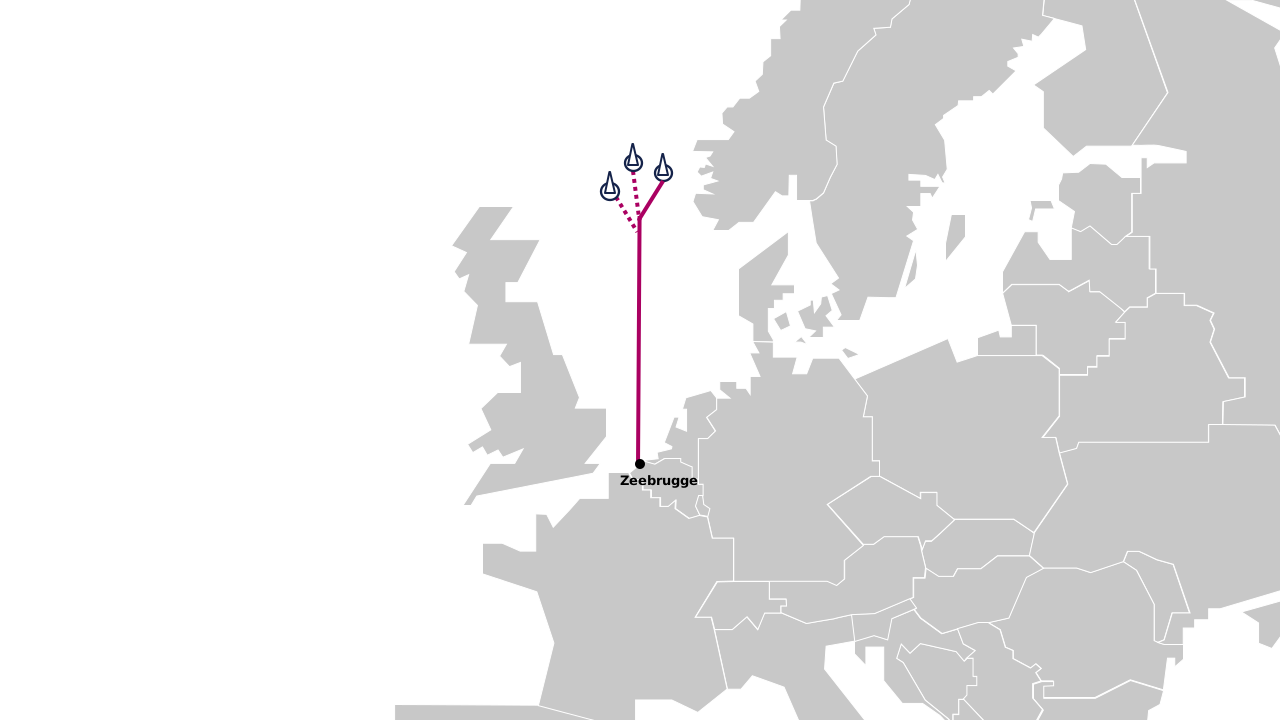
Fluxys is working with Equinor on a subsea CO₂ pipeline linking Zeebrugge to storage sites in Norway's North Sea waters. The aim is to build an open-access pipeline capable of carrying 30 million tonnes of CO₂ per year.
Dunkirk CO₂ export terminal

The CO₂ export terminal developed by Fluxys through its affiliate Dunkerque LNG is an essential link in making a significant contribution to the decarbonisation of the Dunkerque region. A strong commitment by Dunkerque LNG and all the actors in the Dunkirk area to a collective, innovative and ambitious project to reduce CO₂ emissions.
CO2 corridor Zeebrugge-Germany - Ruhbens
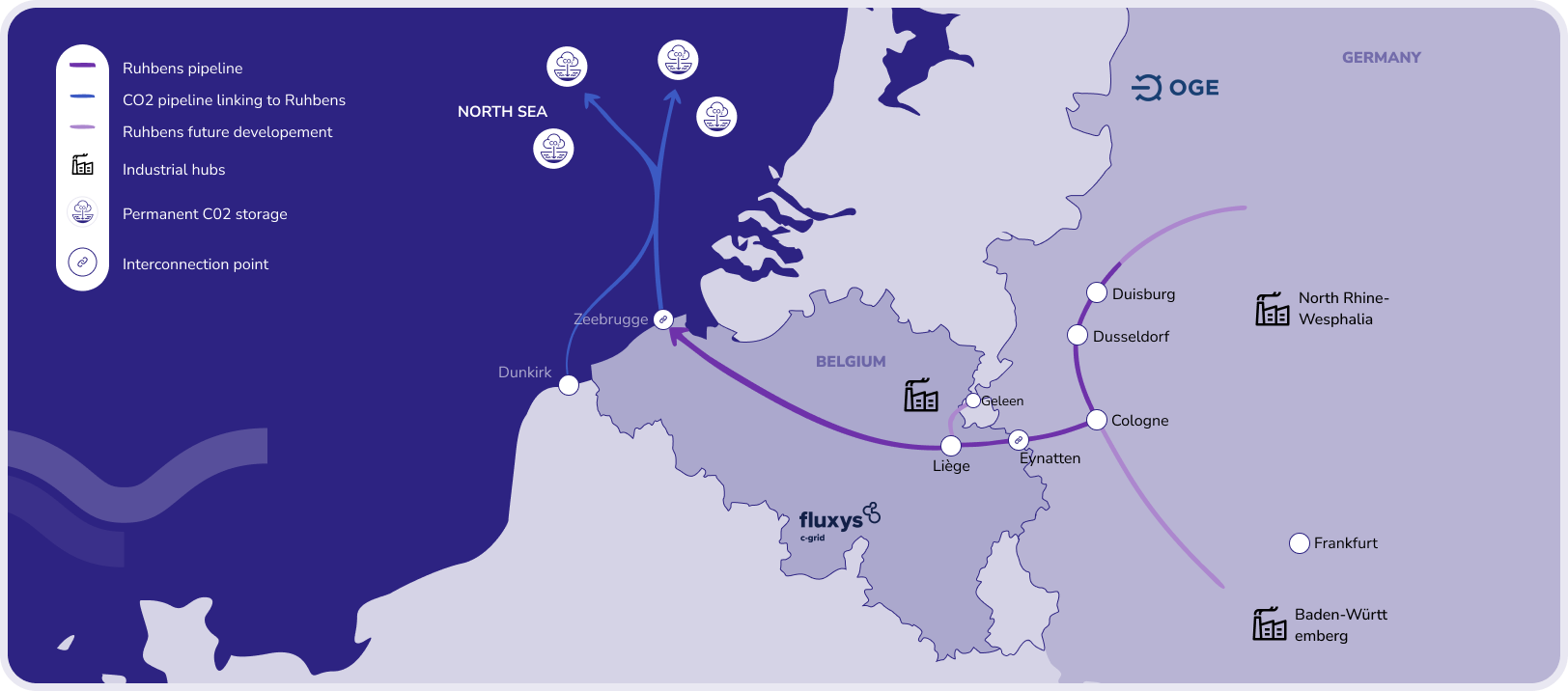
Ruhbens – short for Ruhr, Belgium, North Sea – is a project to establish a vital CO₂ route connecting German industrial areas to the Zeebrugge export hub, unlocking access to multiple permanent geological storage sites in the North Sea.
CarbonConnect
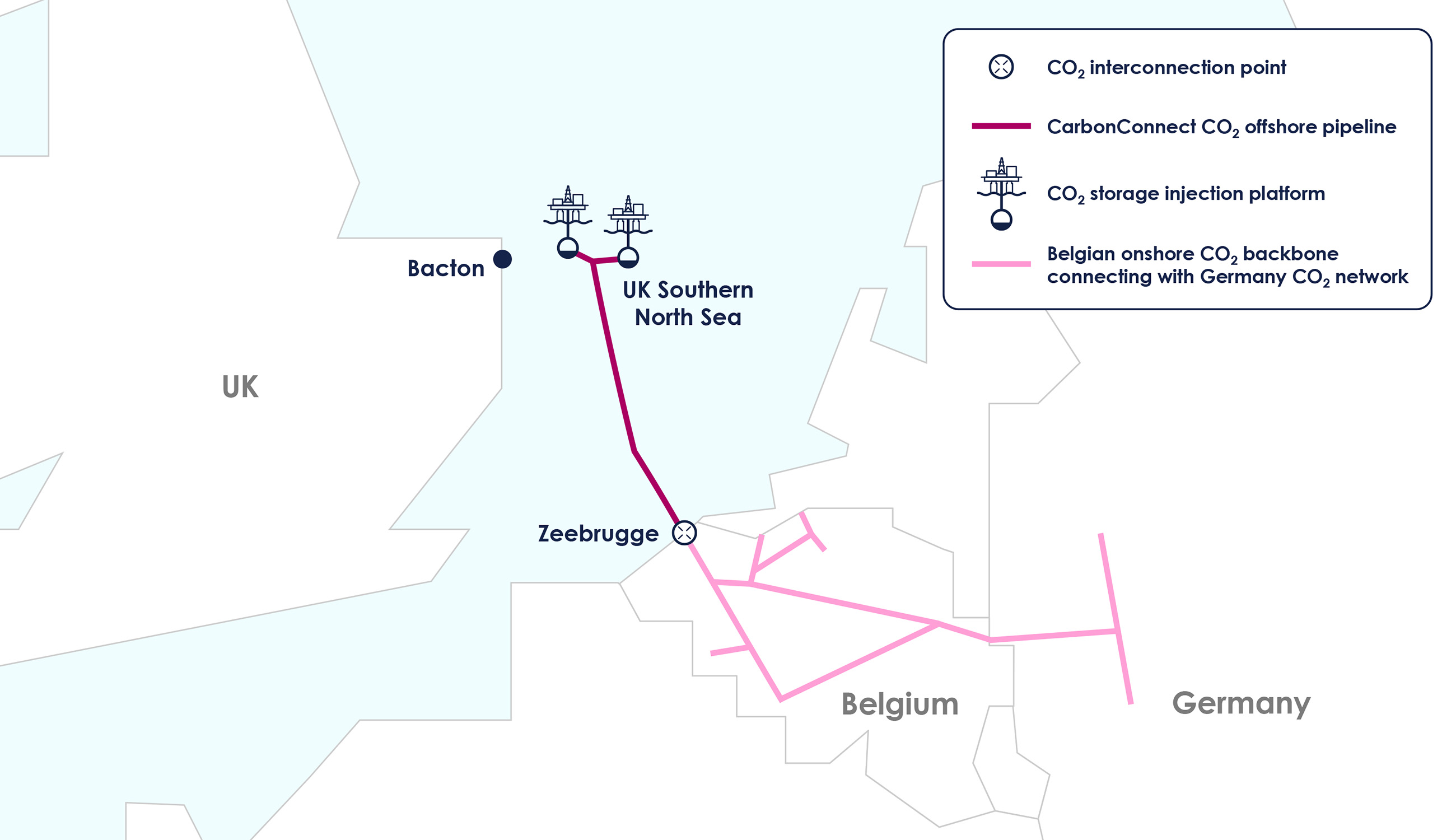
CarbonConnect is an interconnected infrastructure project comprising of onshore installations at the Fluxys Zeebrugge CO₂ compression station and an offshore pipeline and connection hub in the UK Southern North Sea.